
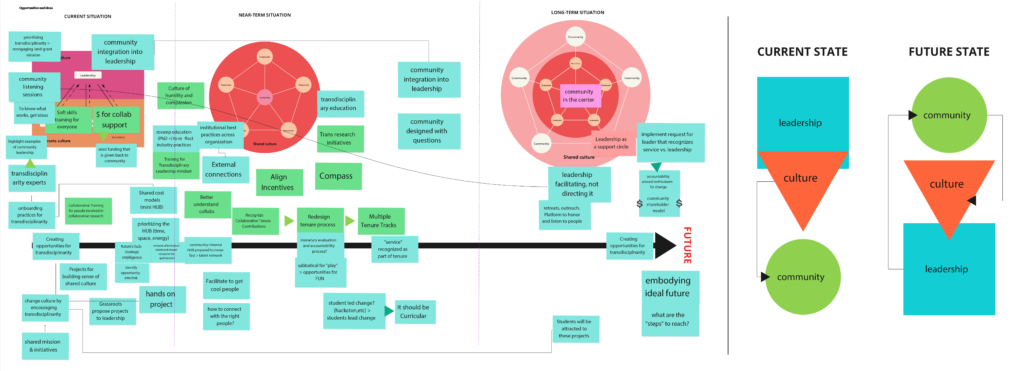
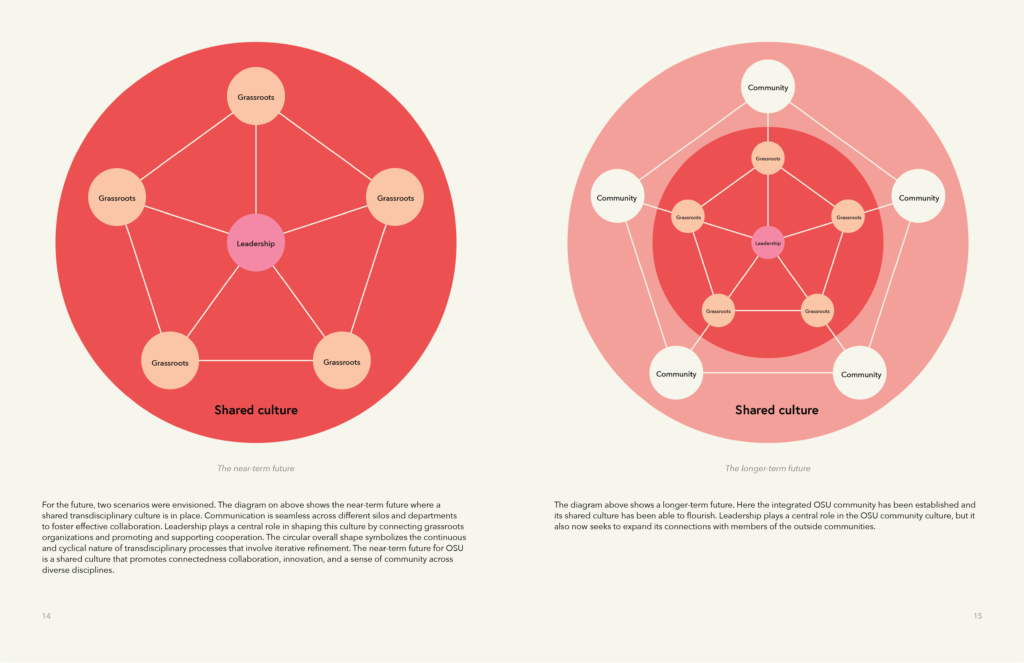
This project explores how transdisciplinary research can reshape the future of collaboration at Ohio State by weaving together design, systems thinking, and institutional culture. Rather than treating space as a neutral backdrop, the work examines how physical, organizational, and social infrastructures interact to either enable or constrain collaboration across disciplines. The circular framework of grassroots nodes connected to leadership within a field of shared culture represents a dynamic system in which ideas, resources, and relationships continuously circulate, reinforcing or transforming how research happens over time.
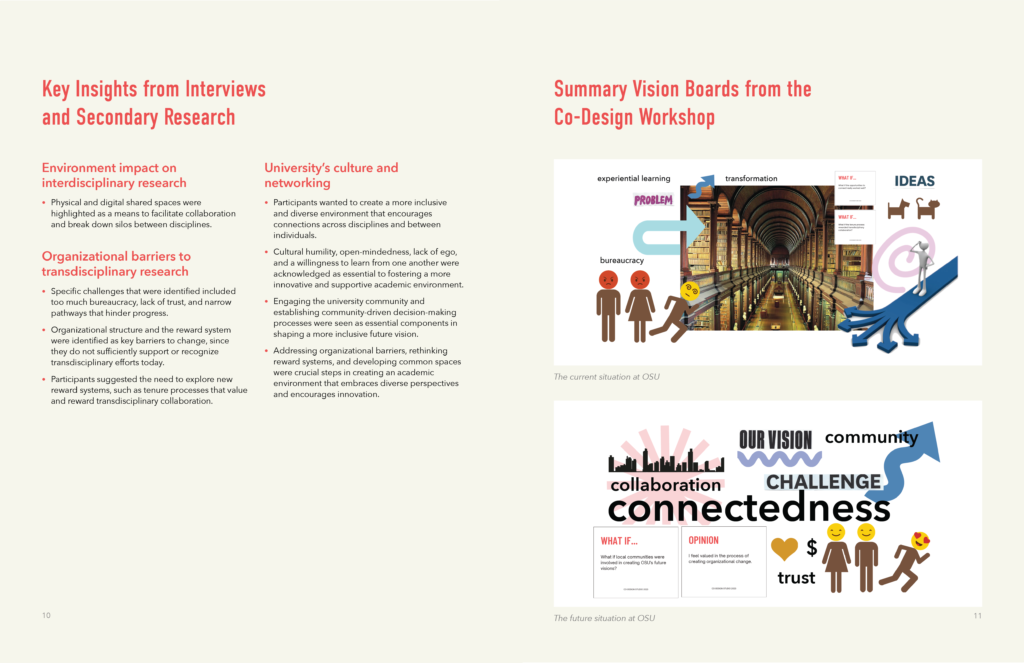
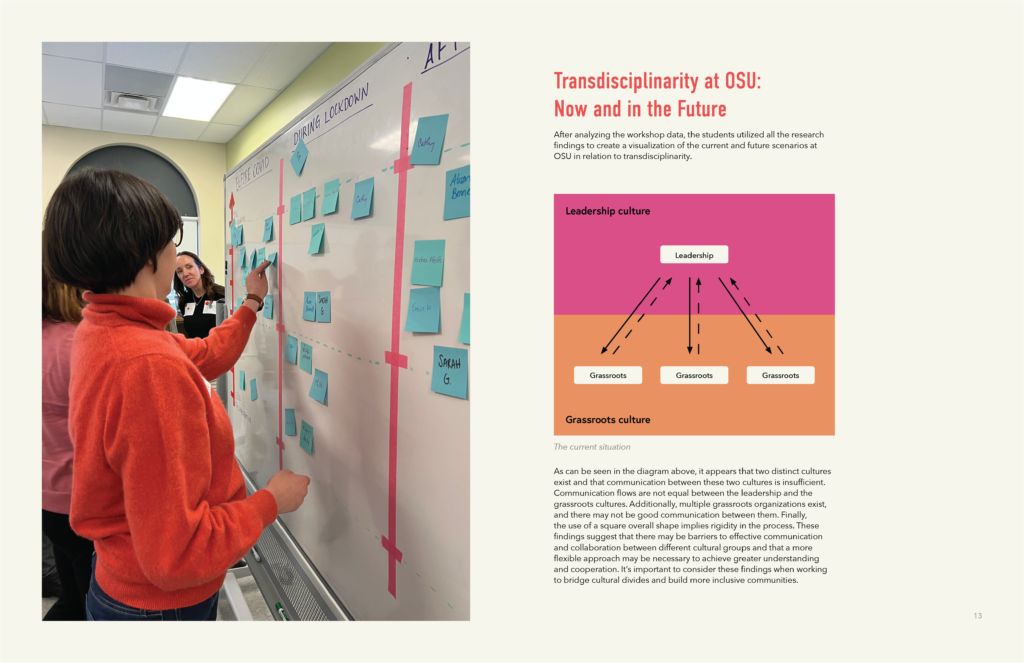
The project is grounded in systems thinking and maps feedback loops between bottom‑up initiatives and top‑down support, highlighting leverage points where targeted interventions, such as new spatial prototypes, funding models, or convening rituals, can have outsized impact. Design research methods like mapping, diagramming, and scenario-building are used to make these invisible dynamics visible, translating complex stakeholder needs and ecosystem relationships into concrete strategies for action. In this way, design operates as both an analytic and propositional tool, helping the university prototype more agile, inclusive, and resilient structures for transdisciplinary work – structures that extend beyond the built environment to encompass governance, community partnerships, and everyday practices.
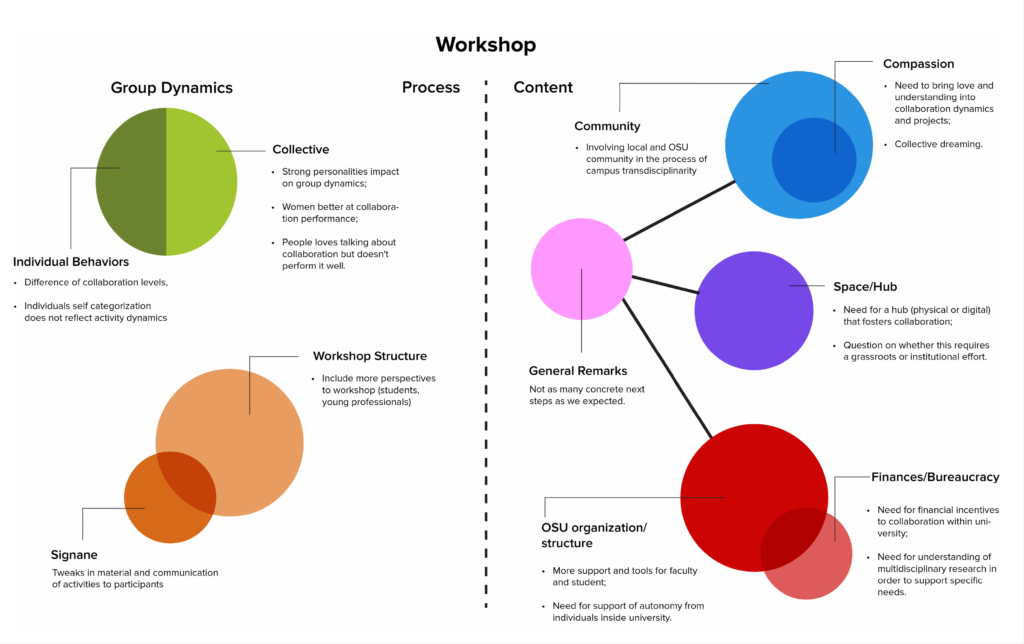
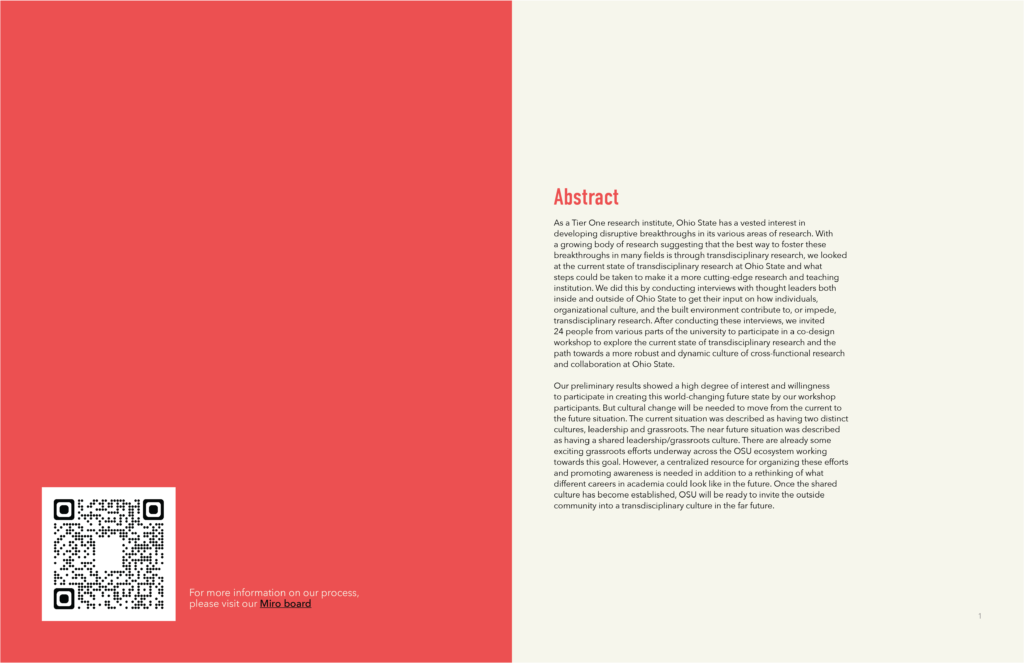
To know more about our analysis process, visit the Miro board.